
By David MacGrandle
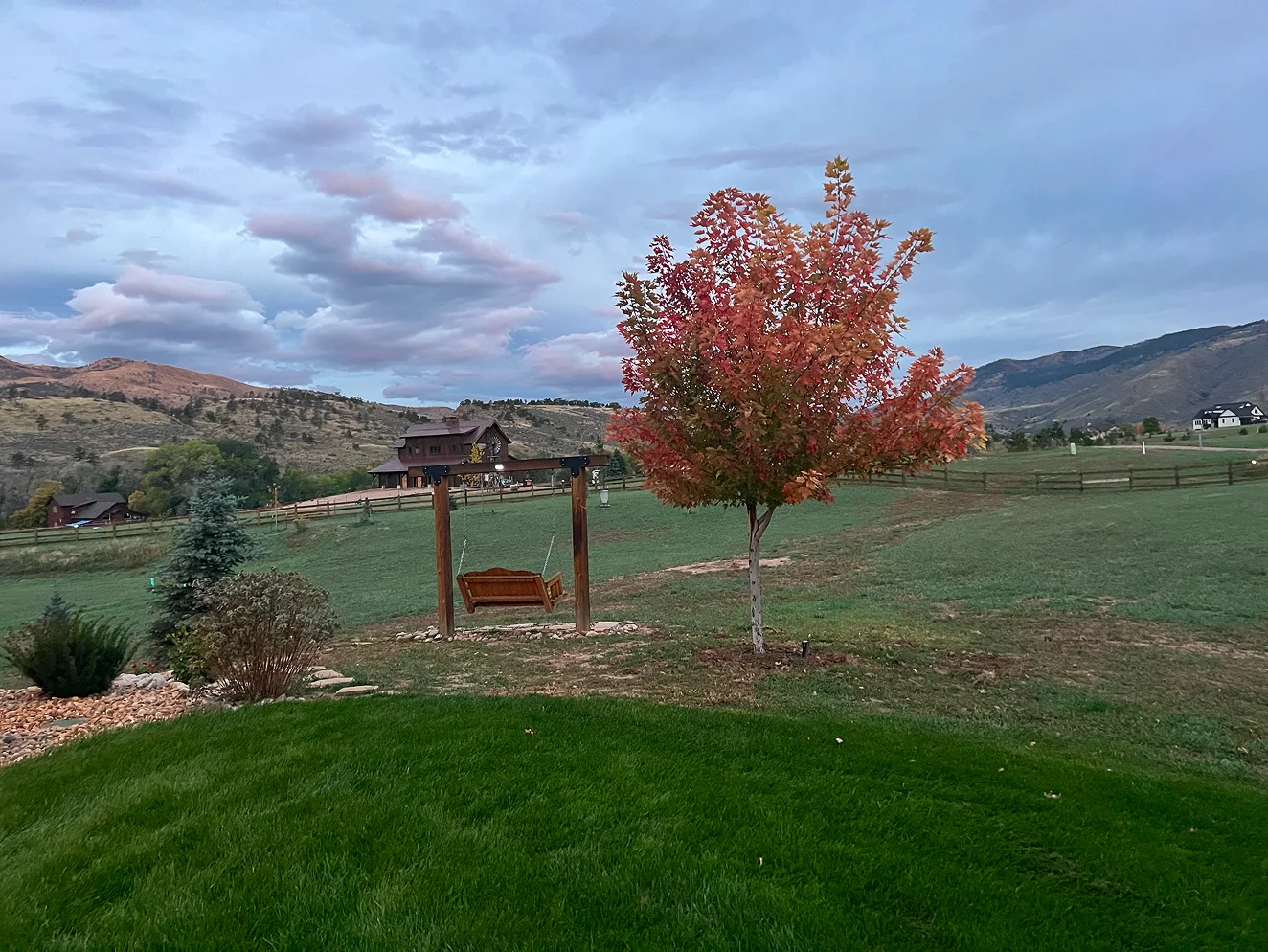
When we moved to Colorado in 2020, I decided our place needed a name. I’d grown up watching TV ranches where homes had identities, Southfork, Shiloh, the Ponderosa, and I wanted that same sense of belonging. Ours sat on eleven acres of uneven land outside Masonville, ringed by hills and wind. I wanted a name that felt rooted, something we could live up to. I didn’t know yet that a name would one day become a metaphor for survival.
My first project was building a fence. We bought cedar posts and rails, and I picked up a 1952 Ford 8N tractor with an auger to drill the holes. The machine had only about twenty horsepower and even less predictability. Sometimes the auger bit straight; other times it wandered an inch or two off the mark, like it had opinions of its own. After six holes, I realized there was no universe in which this fence was going to be perfectly straight.
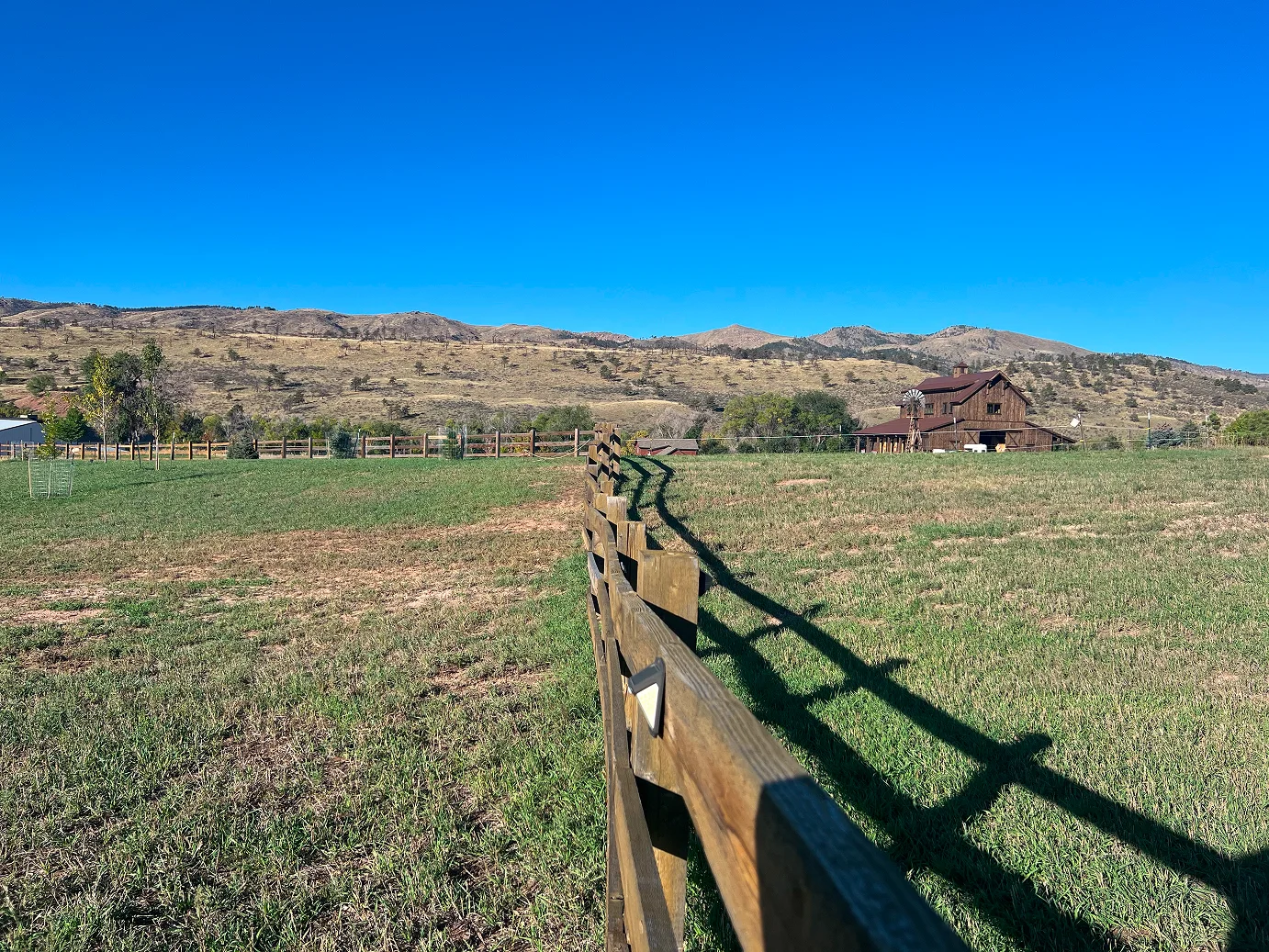
At first I was frustrated. I wanted clean lines, like the kind you see in magazines. But perfection required tools, and a back, that I didn’t have. So I adapted. I curved the line, turned corners into arcs, and let the terrain decide where the posts should stand. That’s how the Crooked Fence was born.
We set about 140 posts, mixed concrete in the heat, stained boards until our arms ached. My wife, Natalie, and our daughter joined in, brushing on coats of cedar stain until the rails glowed cedar brown in the sunset. The air smelled of wood, sweat, and concrete dust. It wasn’t perfect, but it was ours.
When we finished, I stood back and looked at what we’d made. It bent in all the wrong places, but it looked alive. Every curve told a story of compromise and stubbornness. It wasn’t the fence I planned, it was better.
Two years later, cancer came. Diffuse Large B-Cell Lymphoma. A tumor the size of a cantaloupe pressing against my spine.
In the months that followed, the fence became more than a project; it became a metaphor I could hold onto when everything else fell apart. Hospitals, surgeries, chemo, septic shock, CAR-T therapy, it all bent the straight lines of my life. And like that fence, I had to learn to curve instead of break.
There’s a kind of grace in imperfection. When I was building the fence, I didn’t know that lesson yet. I just knew the auger kept wandering. But after cancer, I understood what the fence had been teaching me: strength isn’t about symmetry; it’s about endurance.
The fence still stands in our yard. Through snow, wind, and hail, the posts hold. They lean, they settle, but they stay connected. Every time I look at them, I see survival.
During treatment I wore one of those Crooked Fence hats almost every day. When my hair fell out from chemo, the hat covered more than a bald head, it covered fear. It became armor. Then one week, on a team video call at work, my colleagues surprised me. Every single person logged in wearing a hat. Not the same one, just whatever hat they had. They’d coordinated it behind my back. It was their way of saying, We’re with you.
I took a screenshot. I still have it. A lineup of faces in little boxes, all wearing hats. Probably the least intimidating softball team you’ve ever seen, and one of the kindest things anyone has ever done for me.
After thirty-one years of marriage, I’ve learned Natalie doesn’t do sentiment for sentiment’s sake. She’s practical, driven, and allergic to self-pity. When I came home from septic shock, weak and stitched together, she’d already transformed our guest room into what we now call the “cancer suite.” She installed rails, a shower chair, and curtains she cut down with a saw because the rod was two inches too long. Everything worked. She was, as always, building crooked lines that still stood strong.
The Crooked Fence is all over our property now, on hats, coasters, kitchen towels, and shot glasses we never use. It’s become our shorthand for endurance. When things go wrong, we just say, “Add another bend to the fence.”
Cancer didn’t save me by erasing what was broken. It saved me by teaching me how to live inside the bend, how to find strength in imperfection, humor in exhaustion, and faith in the places that tilt.
Our fence is crooked. Our life is crooked.
And both are still standing.
That’s enough.
Author Bio:
David MacGrandle is a finance executive, board director, and author of Saved by Cancer: Hope Doesn’t Come in Straight Lines (forthcoming 2026). He lives with his wife, Natalie, in Masonville, Colorado, where their crooked fence still stands.
Contact: david@macgrandle.com | SavedByCancer.com | @SavedByCancer
Follow Us: